The Overhaul of the Mexico Federal Gambling and Raffles Law
Mexico is on the verge of finally modernizing its heavily outdated Federal Gambling and Raffles Law of 1947. The country’s commercial gambling market operates under the foundational Ley Federal de Juegos y Sorteos, administered exclusively by the Secretaría de Gobernación (SEGOB), which vests the Federal Executive with the exclusive authority to grant, supervise, and revoke gambling permits. Article 1 of this 1947 framework prohibits all games of chance and wagers on Mexican territory, subject only to strict federal exceptions—meaning no state or municipal authority may issue parallel permits.
Under the Sheinbaum administration, regulatory reform has accelerated after a hostile environment toward new licenses throughout the AMLO administration. On September 4, 2026, Interior Secretary Rosa Icela Rodríguez announced that Segob had essentially completed its internal multi-departmental review of the new gambling proposals. The finalized draft is now being passed to the federal Security Cabinet for final review before structural legislative actions are taken.
Segob Casino Regulations Mexico: The Fight Against Money Laundering
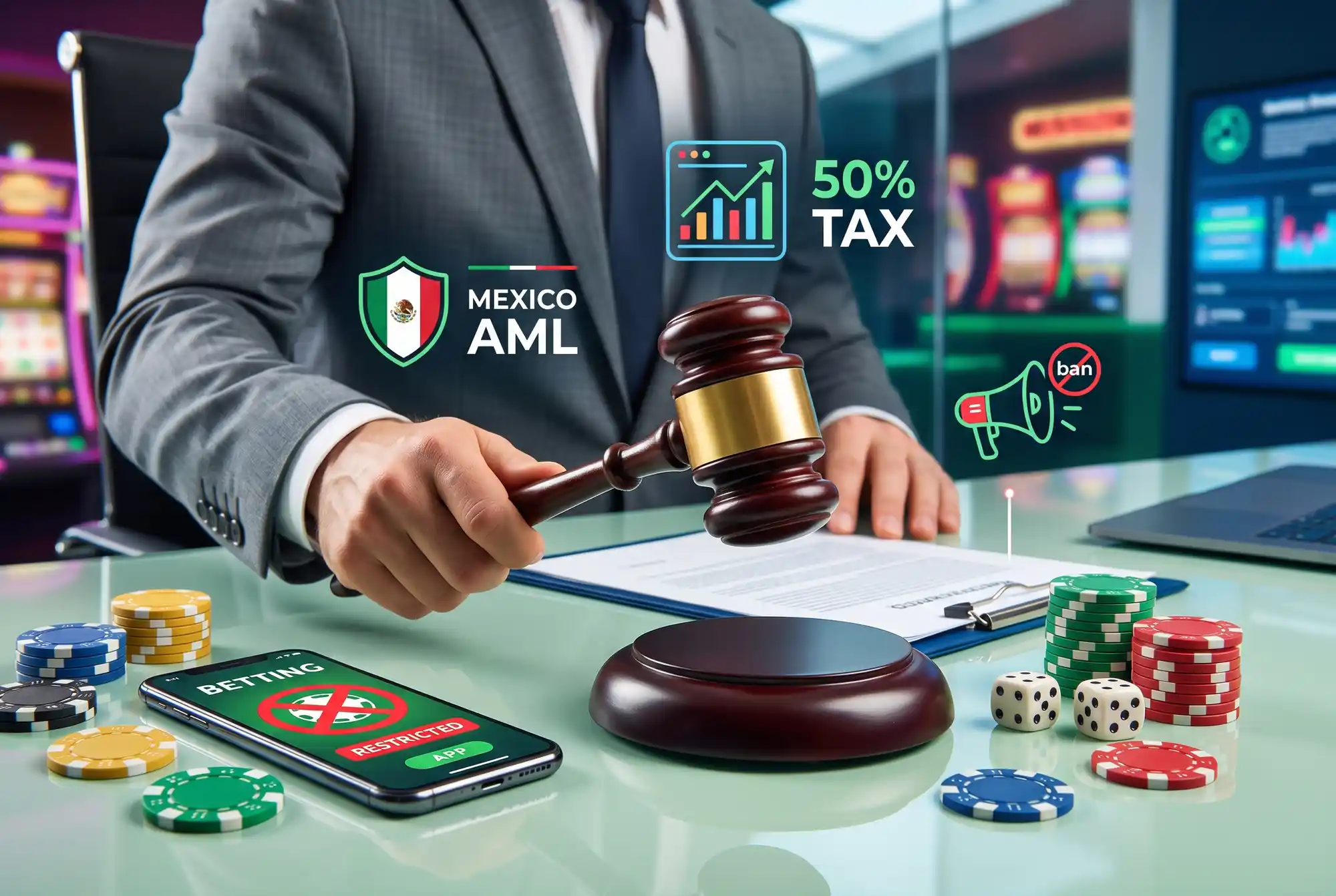
The urgency of the final review is heavily tied to recent crackdowns on illicit finances and organized crime. Following a joint investigation by the Finance Ministry and the Security Cabinet that led to the suspension of 13 high-risk casinos, Segob is prioritizing legal certainty for operators while strictly sanctioning money-laundering vulnerabilities. Separate anti-money laundering (AML) protocols published in August 2026 will take effect on November 30, 2026.
According to the approved legislative proposals, these sweeping compliance changes were made with the direct intention of “contributing to the fight against money laundering, requiring taxpayers to make their income transparent, and reducing opportunities for illicit operations”.
To operate within this hardened framework, operators are now required to maintain a per-player ledger with full transaction history and preserve all records for the periods demanded by updated tax and AML laws. Facilities must block access to wagering areas by anyone under 18, verify age with official identification documents, and maintain CCTV evidence of all access controls. Operators must also implement dedicated anti-cheating surveillance programs and surrender data ledgers to SEGOB or the Financial Intelligence Unit (UIF) upon lawful request.
MORENA Gambling Advertising Restrictions and Public Health Measures
Lawmakers from the ruling MORENA party, led by Deputy Alberto Martínez Urincho, have integrated comprehensive consumer protection measures into the reform framework. The new rules officially seek to classify gambling harm as a public health issue.
If passed, the reform will mandate strict public health warnings on digital online platforms and at all approximately 400 land-based venues in Mexico. Furthermore, the legislation imposes severe MORENA gambling advertising restrictions. While all gambling advertising in Mexico already requires prior SEGOB approval before publication, the reform introduces a complete ban on using social media influencers for gambling advertisements. Additionally, betting markets focused on political developments, global conflicts, and humanitarian crises will be strictly prohibited under the new federal guidelines.
The Controversial Mexico 50% Gambling Tax Hike
This sweeping legislative overhaul is happening against the backdrop of the controversial 2026 Economic Package, which places the commercial gambling sector under intense fiscal scrutiny. The Mexican Senate recently approved the 2026 fiscal package, featuring a reform to the Special Tax on Production and Services (IEPS) Law that drastically raises the tax on games with bets and sweepstakes from 30% to 50%.
As a result of this fiscal reform, the Ministry of Finance expects to collect MXN 761.5 billion (more than USD 40 billion) in 2026, representing a 10% increase from 2025, with a portion of the funds allocated directly to health programs. Crucially, the government’s explicit goal is to expand the tax net to non-resident providers offering B2C and B2B digital services to users in Mexico.
However, the measure has drawn immense industry alarm not just for its headline rate, but because of its underlying mechanics. The IEPS in Mexico is an excise tax; the underlying law calculates the base as the total amounts effectively received from participants. This means the 50% tax is levied on turnover (the total amount of bets), rather than Gross Gaming Revenue (GGR).
For operators, that distinction significantly alters product economics. At face value, a 50% turnover tax is economically prohibitive for most verticals. If IEPS is charged on every $100 wagered, a 50% rate equals $50 in tax, regardless of operator hold. For a sportsbook with a 9% hold, a $100 handle yields $9 GGR, making a $50 tax equal to roughly 556% of GGR; for slots with a 4% hold, it equals 1,250% of GGR.
Operator Backlash and the AIEJA Mexico Casino Market Warning
Industry trade bodies like AIEJA have urged the government to finalize the legal modernization quickly, arguing that without calibrated, modern regulations, the 50% tax burden will simply drive consumers into the black market and stall foreign investment.
Currently, foreign operators cannot apply for a Mexico gaming license directly; no new standalone online gaming licenses are being issued by the DGJS, and structural sub-licensing ended in November 2023. Practical market access requires operating via “skin” partnerships with existing federal-license holders (permisionarios) like Caliente, Codere, or Big Bola. In these structures, the permisionario holds the legal-entity layer, while the international operator provides the platform, typically splitting revenue 70-80% to the operator and 20-30% to the permisionario. The aggressive 50% turnover tax threatens to shatter the margins of this partnership model.
Tax lawyers from the firm Lazcano and Avedillo issued a stark warning regarding the legislation: “The measure seems to be an incentive for bettors and players who currently use platforms authorized by the Ministry of the Interior to flee due to the increased cost of these bets, towards the growing illegal gambling market”. Raising the tax will force legally established licensees to aggressively reconsider their business models, pivoting to high-hold products, cutting promotions, or reducing their footprint.
Channelisation risk is severe. It is conservatively estimated that 60% of the total online betting available to Mexican players today is already illegal. Experts warn that with the implementation of the 50% IEPS rate, the Tax Administration Service (SAT) could actually lose MXN 12 billion (USD 650 million) due to regulated market contraction. Without rate and base calibration—shifting the tax from turnover to GGR—the reform risks hollowing out the regulated channel, weakening consumer protections, and sending local play completely offshore.
Sources: GamingEminence (Regulatory & Tax Analysis); Yogonet International (Legislation & LatAm Market News); Gambling Law Index / GLI (Jurisdictional Frameworks); GamingCompliance.io (SEGOB Regulatory Standards); LegalBison (Market Entry & Permisionario Licensing Data).