
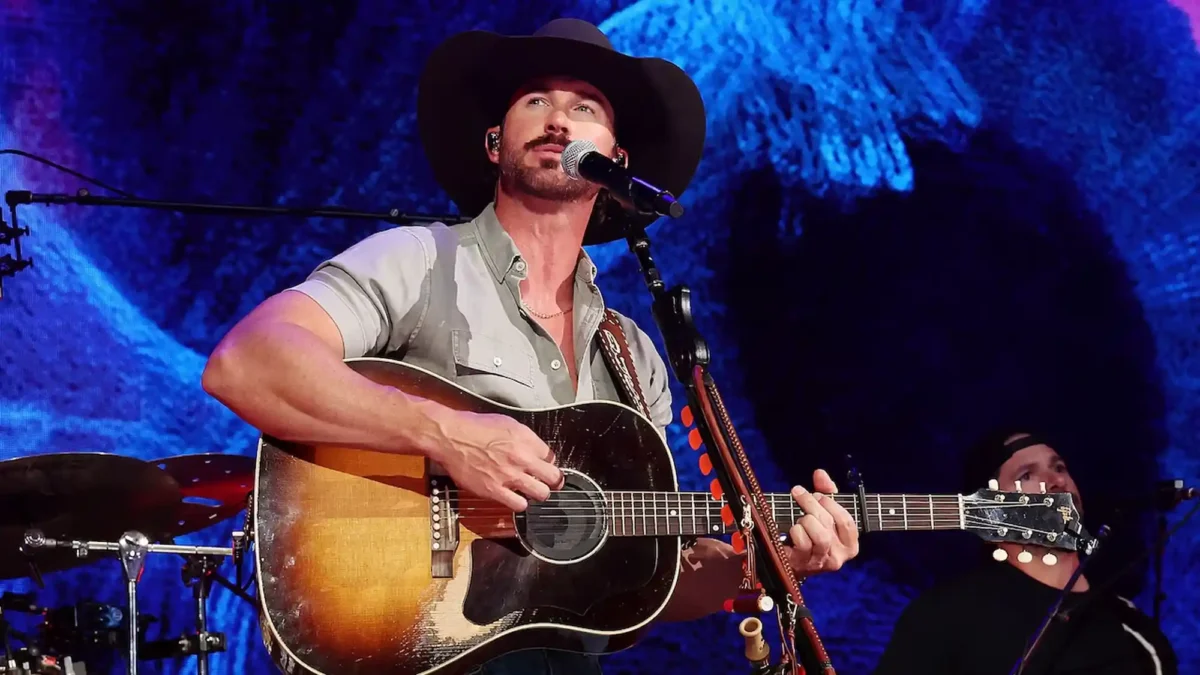
The landscape of competitive reality television is undergoing a massive shift this fall. In a move that fundamentally bridges the gap between traditional country music audiences and primetime network television, NBC has officially tapped country music superstar Riley Green to fill a coveted red chair for Season 30 of The Voice.
According to breaking coverage from AL.com, the Alabama native will be joining veteran coaches Kelly Clarkson and Adam Levine when the milestone thirtieth season premieres in September 2026. Green officially confirmed the news to his massive fanbase with a characteristic Southern drawl, noting on his social media, “I guess y’all can start calling me coach … see ya this fall.”
Yahoo Entertainment also highlighted the sheer scale of Green’s current media footprint, framing this announcement as a play for “total TV domination.” Having recently made his acting debut on the CBS series Marshals, Green is successfully booking major series across competing networks. This multi-platform ubiquity is a masterclass in modern artist branding.
As an industry analyst who has tracked the impact of reality TV on music sales for over a decade, I see this as much more than a simple casting announcement. The decision to bring Green into the fold represents a calculated programming strategy by NBC to capture the highly coveted rural and Southern demographics, a market segment largely left open since Blake Shelton’s departure.
But what does this mean for the competitive dynamics of the show? For viewers researching the Riley Green The Voice Season 30 coaching strategy, the immediate question is whether a relatively new mainstream television personality can hold his own against reality TV juggernauts like Clarkson and Levine.
The early indicators suggest a fiery season ahead. As reported by AL.com, Kelly Clarkson has already fired the first shots in what is sure to be a highly publicized rivalry. Clarkson sent Green a welcome voicemail that was equal parts complimentary and threatening, declaring her status as a fan of his music before swiftly pivoting to a warning: “Team Kelly’s gonna whoop that ass.”
This immediate injection of trash talk is essential for the show’s ecosystem. The Voice thrives on the playful, sometimes sharp-elbowed banter between its coaches. Levine and Clarkson already have an established rapport, and introducing a stoic but highly competitive former college quarterback into that mix provides fresh narrative tension.
Yes, before his music career took off, Green was a quarterback for the Jacksonville State University Gamecocks from 2008 to 2010. That gridiron background instills a specific type of competitive psychology. We aren’t just looking at an artist; we are looking at an athlete who understands how to build a team, scout raw talent, and execute a winning playbook under pressure.
Furthermore, fans analyzing how Riley Green’s Redneck Island experience helps on The Voice will uncover a crucial advantage. Green is entirely unbothered by the cameras. He appeared on two seasons of the CMT reality series Redneck Island, ultimately winning the competition and a $100,000 prize in 2016. He knows how to navigate the unscripted television environment, manipulate screen time, and charm a viewing audience.
NBC is already leaning heavily into Green’s established personal brand. AL.com notes that promotional teasers have featured a big red chair emblazoned with his name, fully decked out with a cowboy hat and duck calls. This is a direct nod to his “Duckman” persona—Green is an avid outdoorsman with a signature duck call and a bar in Nashville called Riley Green’s Duck Blind.
This level of niche branding is brilliant. When looking at the success rate of country singers transitioning to reality TV coaches, authenticity is the primary currency. Viewers can easily detect manufactured personas. By allowing Green to bring his authentic lifestyle to the coaching panel, NBC ensures that his interactions with contestants will feel grounded and genuine.
However, we must also explore a contrasting viewpoint: Can a traditional, straight-down-the-middle country star adapt to the diverse, multi-genre talent pool of The Voice? Green’s discography—featuring hits like “There Was This Girl,” “I Wish Grandpas Never Died,” and “Different ‘Round Here”—is deeply rooted in a specific stylistic lane.
While he undeniably has the technical chops to advise country hopefuls, his ability to mentor a pop belter, an R&B crooner, or an indie-folk duo remains untested. Adam Levine, with his pop-rock background, and Kelly Clarkson, with her unparalleled vocal versatility, naturally appeal to a wider variety of auditioning artists. Green will need to quickly demonstrate that his musical vocabulary extends beyond the county line if he wants to recruit a championship-caliber team.
From a data perspective, the synergistic effects of this television deal on Green’s music streams will likely be astronomical. We have seen this “Voice Effect” before. An artist sitting in the red chair enjoys a weekly, multi-hour commercial for their back catalog.
Green is already riding an incredible wave of momentum. He has secured four Country Music Association Awards over the last two years, largely propelled by his massive collaborations with Ella Langley, such as “You Look Like You Love Me” and “Don’t Mind If I Do.” He also recently performed on The Voice as a guest artist, singing “Jesus Saves” during the Season 28 finale in December 2025.
Heading into 2026, he is nominated for four Academy of Country Music (ACM) Awards and an American Music Award for Best Male Country Artist. By the time The Voice Season 30 premieres in the fall, Green could very well be the most visible male artist in country music.
The strategic rollout of this announcement also leaves one massive puzzle piece missing: the identity of the fourth coach. With Levine returning to his pop-rock throne, Clarkson reigning over pop and soul, and Green taking the country mantle, the fourth chair will likely be filled by an R&B powerhouse or a prominent hip-hop figure to balance the demographic quadrants.
The anticipation surrounding The Voice Season 30 Adam Levine and Kelly Clarkson rivalry, combined with Green’s debut and a mystery fourth coach, guarantees a massive ratings draw for the premiere episode.
Ultimately, Riley Green’s transition to The Voice is a testament to his undeniable charisma and the changing definition of a modern music superstar. It is no longer enough to simply release hit records and tour; artists must become multi-dimensional media properties.
Whether he manages to steal the crown from Clarkson or out-maneuver Levine during the Blind Auditions, Green has already won the broader media game. He has successfully leveraged his musical talent, his athletic competitiveness, and his authentic Southern charm to secure one of the most powerful platforms in television. We will be watching closely this fall to see if the “Duckman” can orchestrate a victory.
Author: Dr. Harmon Vance, Music Industry Analyst and Reality Television Strategist