
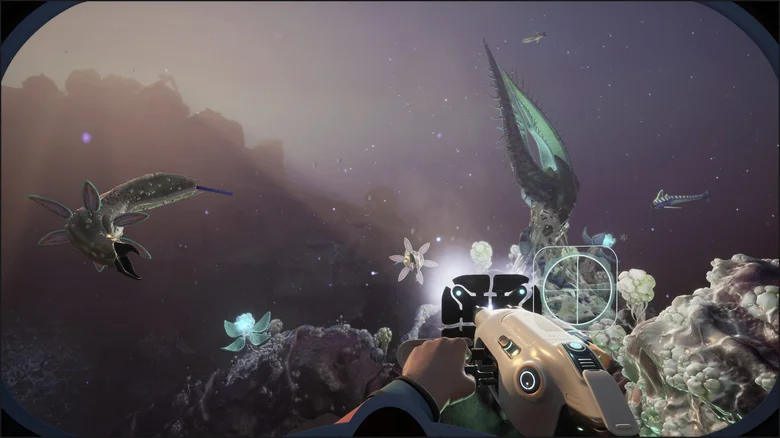
The wait is finally over for fans of deep-sea survival horror. Subnautica 2 is officially arriving this week, and the oceanic landscape of the video game industry is already shifting in its wake.
According to reports from Inven Global, the highly anticipated sequel has dominated the charts, holding the number one spot on global Steam wishlists for nine consecutive months. Beating out heavy hitters like Forza Horizon 6 and Deadlock, this is undeniably one of the biggest PC releases of 2026.
However, diving into an early access title is never a straightforward affair. Between sweeping engine upgrades, complex publisher lawsuits, and shifting co-op mechanics, there is a lot to unpack before you take your first plunge into the abyss.
Here is everything you need to know about the Subnautica 2 early access release time, its technical framework, and the controversial development cycle that brought us here.
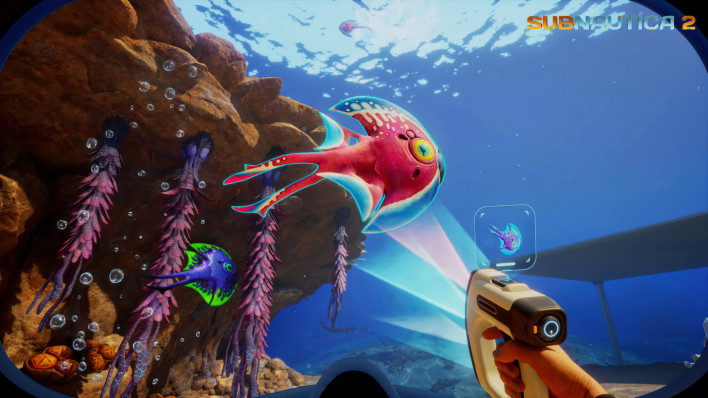
Global Release Times and Xbox Game Pass Availability
Developer Unknown Worlds Entertainment has scheduled the global launch for May 14, 2026, though timezone variance means some regions will cross into May 15. As detailed by KeenGamer, the official rollout begins at 8 AM Pacific Daylight Time (11 AM Eastern Daylight Time / 4 PM British Summer Time).
Players in Eastern territories, such as Japan and Korea, will see the game unlock right at midnight on May 15. The synchronization of this global launch ensures that the multiplayer servers will be immediately populated.
For budget-conscious players, the biggest news is the Subnautica 2 Xbox Game Pass availability. Microsoft has confirmed that the title will be a Day One release on its subscription service via the Game Preview program.
This means subscribers to Xbox Game Pass Ultimate and PC Game Pass can download and play the game immediately without paying the $29.99 standalone retail price. Given the high barrier to entry that early access games sometimes present, putting the game on a subscription service is a brilliant strategy to stress-test the new 1-to-4 player co-op infrastructure.
Unreal Engine 5: A Deeper Technical Analysis
The original Subnautica was a masterpiece of atmosphere, but it was notoriously plagued by technical limitations. Built on the Unity engine, the game suffered from aggressive asset pop-in, jarring framerate drops, and save-file bloating.
DLCompare reports that Subnautica 2 abandons Unity in favor of Epic’s powerhouse Unreal Engine 5. This is a monumental shift that fundamentally changes how the game renders underwater biomes.
From a technical standpoint, utilizing UE5’s World Partition system allows developers to load massive chunks of the map seamlessly. This theoretically eliminates the immersion-breaking pop-in of kelp forests and coral reefs that plagued the first game.
Furthermore, the game’s minimum PC requirements—an Intel Core i5-8400 or AMD Ryzen 5 2600 paired with a GeForce GTX 1660 6GB—reveal a heavily optimized framework. To achieve UE5’s rich lighting on a GTX 1660, Unknown Worlds is likely relying on software-based Lumen rather than hardware-accelerated ray tracing, ensuring the game remains accessible to mid-range PC builds.
Despite this graphical leap, ComicBook.com confirms that the game is officially Steam Deck Verified right out of the box. Valve has rigorously tested the title, certifying that it runs from start to finish on the handheld’s Linux-based ecosystem.
Achieving stable performance on the Steam Deck with a native Unreal Engine 5 title is no small feat. It suggests that Unknown Worlds has implemented aggressive scalability options, likely utilizing AMD’s FSR (FidelityFX Super Resolution) to maintain a playable 30 to 40 FPS on the portable machine.
Lore, Leviathans, and the Return to Deep-Sea Terror
If you were worried that the introduction of multiplayer would dilute the franchise’s signature isolation, the latest marketing material puts those fears to rest. As highlighted by GosuGamers, the recent two-hour “First Dive” livestream and accompanying gameplay trailer double down on psychological horror.
Players take on the role of Pioneers aboard the colony ship CICADA. Displaced by ongoing conflict, you are promised a new life by Alterra, but a catastrophic failure leaves you stranded on a terrifying new alien world.
The trailer’s voiceover is chilling: “Forget your debt. Forget NoA. Forget Alterra… It’s all gone now.” This narrative shift strips away the bureaucratic safety net of the first game. You aren’t just a stranded corporate employee; you are an isolated refugee at the mercy of a rogue ship AI that demands the mission continue at all costs.
Game design lead Anthony Gallegos admitted that playtesting the game often leads to moments of genuine terror. The Unreal Engine 5 underwater graphics requirements aren’t just for show; the dynamic, physically-based lighting creates pitch-black oceanic trenches where massive leviathan-class predators hunt.
Early access players will be rewarded for braving these depths. As an incentive, those who purchase the game during its first week will receive an exclusive, buildable Reaper statue for their underwater base—a morbid trophy for surviving the game’s darkest biomes.
The Publisher Lawsuit and the Generative AI Controversy
However, the road to this week’s launch has not been smooth. Behind the scenes, a fierce corporate battle has raged over the creative direction of the studio.
As Engadget reported, the game’s development hit a massive roadblock last summer when publisher Krafton (who acquired Unknown Worlds in 2021) unceremoniously fired the heads of the studio.
This sparked a high-profile lawsuit that concluded in March 2026, with a court ordering Krafton to reinstate Unknown Worlds CEO Ted Gill. This legal turmoil provides critical context for the game’s current state. While development is back on track, the internal strife undeniably slowed production.
Furthermore, there is a fascinating contradiction regarding artificial intelligence. Krafton has publicly branded itself as an “AI-first company,” pushing for rapid asset generation. Yet, the developers at Unknown Worlds have staunchly pushed back.
According to statements made by creative media producer Scott MacDonald, absolutely zero generative AI was used in the creation of Subnautica 2. Every texture, creature roar, and biome was handcrafted. This defiance of publisher mandates underscores a powerful contrasting viewpoint in modern game development: the belief that true psychological horror and environmental storytelling cannot be algorithmically generated.
The Early Access Gamble: A Contrasting Viewpoint
While excitement is reaching a fever pitch, it is important to critically evaluate the early access model. Unknown Worlds expects Subnautica 2 to remain in early access for “about 2 to 3 years.”
In an era where gamers are increasingly suffering from early access fatigue, asking players to invest $29.99 for a game that won’t see its 1.0 release until 2028 or 2029 is a massive gamble.
The first Subnautica thrived on community feedback, using player data to refine biomes and creature behaviors. However, the gaming landscape of 2026 is vastly different from 2015. Players are less forgiving of incomplete narratives and missing features.
If the day-one build suffers from game-breaking bugs or a lack of endgame content, the initial goodwill generated by the Subnautica 2 Steam Deck verification and UE5 graphics could rapidly evaporate.
Ultimately, Subnautica 2 is shaping up to be a defining moment for survival games. It promises unparalleled visual fidelity, deep narrative intrigue, and a return to the terrifying isolation that made the original a classic. Whether it can sustain its momentum over a multi-year early access period remains the true test of survival.