
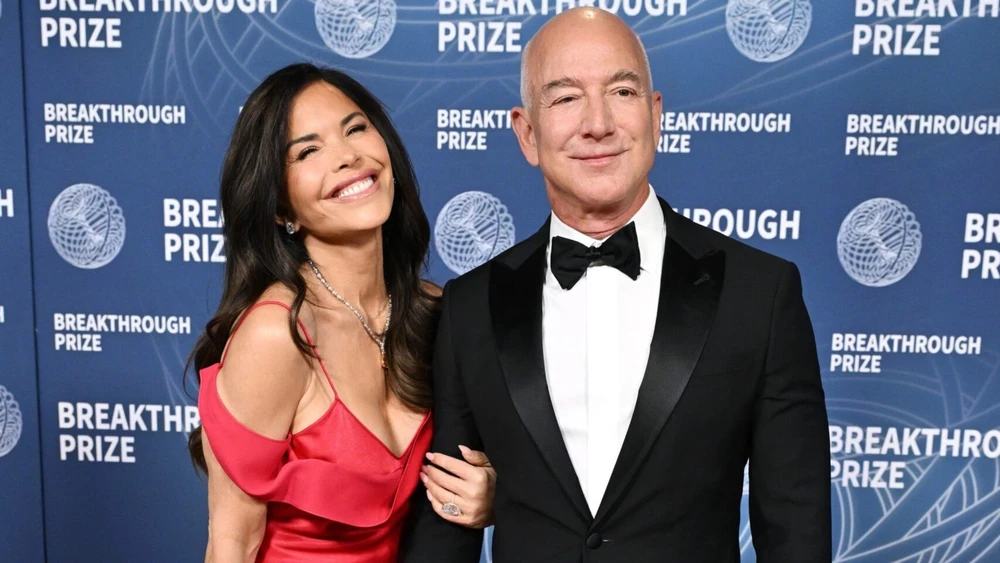
The first Monday in May has long been etched into the cultural calendar as the definitive night for high fashion, a sacred evening where the steps of the Metropolitan Museum of Art are transformed into a theater of avant-garde couture and unbridled imagination. But in 2026, the Met Gala underwent a seismic shift. Officially, the dress code and theme for the evening was “Fashion is Art,” a celebration intended to honor the Costume Institute’s sprawling historical archives and the virtuosity of clothing as a sculptural medium. Unofficially, however, the internet, the critics, and the activists swarming the streets of New York City had already bestowed a different title upon the evening: “The Bezos Ball.”
At the absolute center of this year’s cultural storm were Amazon founder Jeff Bezos and his wife, former journalist and media personality Lauren Sánchez Bezos. Stepping far beyond the traditional roles of mere celebrity attendees, the power couple assumed the mantle of honorary co-chairs and lead sponsors for the 2026 event. Their presence—backed by a reported $10 million personal contribution to the gala—did not just turn heads; it fundamentally altered the DNA of the evening, sparking intense debates about wealth inequality, corporate power, and the evolving nature of the Met Gala itself. What was once a celebration of design and artistry quickly devolved into a flashpoint for political expression, transforming the red carpet into a high-stakes collision between privilege and public perception.
The Silicon Valley Takeover and a Record-Breaking $42 Million
For decades, the Met Gala guest list has read like a who’s who of Hollywood royalty, chart-topping musicians, and iconic supermodels. It was a space where legacy fashion houses battled for the chance to dress the ultimate “It” girl, and where designers became celebrities in their own right. But the 2026 gala cemented a trend that had been quietly brewing for years: the absolute takeover of the red carpet by Silicon Valley’s ultra-wealthy elite.
Tech money powered this year’s Met Gala to its biggest fundraising year in history. The 2026 event raised a staggering, record-breaking $42 million for the Metropolitan Museum of Art’s Costume Institute, completely obliterating the previous year’s record of $31 million. This colossal financial leap was not driven by traditional fashion conglomerates, but by the tech industry. Alongside the Bezoses’ $10 million injection, corporate behemoths including Meta, OpenAI, Amazon, Snapchat, and Shopify all purchased tables. And these tables did not come cheap—prices surged to $350,000 each, while individual tickets skyrocketed to an eye-watering $100,000, up significantly from the $75,000 price tag in 2025.
The red carpet reflected this corporate shift. Snapchat co-founder Evan Spiegel, Instagram CEO Adam Mosseri, Google co-founder Sergey Brin, OpenAI’s Charles Porch, and a slew of high-ranking Amazon executives all made appearances. The sheer concentration of tech billionaires led many cultural commentators to describe the event as a “billionaire circus” rather than an artistic endeavor. The Met Gala, which had already been facing accusations of becoming overly commercialized and disconnected from reality, was suddenly staring down the barrel of public resentment. As the American public continues to grapple with a crippling affordability crisis and rampant inflation, the spectacle of tech titans paying $100,000 to walk up a flight of stairs felt, to many, overwhelmingly gauche and entirely hollow.
Lauren Sánchez’s “Madame X” Schiaparelli Masterpiece
If the theme was “Fashion is Art,” Lauren Sánchez Bezos certainly understood the assignment, even if her presence was a magnet for controversy. While her husband opted for a more clandestine approach to the evening, Sánchez embraced the spotlight, stepping onto the carpet in a breathtaking, custom-made midnight blue couture gown by the legendary house of Schiaparelli.
Designed in close collaboration with Schiaparelli’s creative director Daniel Roseberry and celebrity stylist Law Roach, the dramatic ensemble featured a sharply defined, tightly corseted bodice that Sánchez reportedly requested to personalize the silhouette. The gown was adorned with heavy, jewel-like embellishments draped elegantly from the shoulders, creating a sculptural aesthetic that aligned perfectly with the evening’s artistic mandate.
But the true genius of the look lay in its historical reference. The dress was a direct homage to John Singer Sargent’s infamous 1884 painting, Madame X (a portrait of the French socialite Madame Pierre Gautreau). When Sargent first unveiled the painting, it caused an absolute scandal in Parisian society because one of the jeweled straps on Madame Gautreau’s black gown was depicted slipping suggestively off her shoulder. The uproar over this overtly sexual and “tasteless” detail was so severe that Sargent was eventually forced to repaint the strap in an upright position, and the painting was hidden away for nearly thirty years before finally being sold to The Met.
Speaking to Vogue about her inspiration, Sánchez articulated her fascination with the history of the portrait. “Today, a strap is a strap,” she noted, “but back when Madame X was painted by Sargent, a strap was a scandal.” Her choice was a pointed, intellectual nod to the museum’s own archives, blending old-world glamour with the avant-garde aesthetic that Schiaparelli is globally renowned for.
The Bizarre “Firefighter” Met Gala Prep
However, it was not just the dress that generated headlines, but the grueling and highly unorthodox physical preparation Sánchez underwent to fit into the tight Schiaparelli corset. In what she self-described as “probably the most unique Met prep ever,” the former journalist eschewed traditional celebrity wellness routines—like juice cleanses or pilates—in favor of rigorous, real-world emergency response drills with the New York Fire Department.
Sánchez spent her pre-Gala days donning heavy, professional firefighter gear and crawling through smoke-filled obstacle courses designed to simulate life-saving rescue missions. “It was bananas, but I loved it,” she confessed in an interview. “I probably lost about 2 lbs. doing it.”
While she found the experience thrilling, medical professionals were quick to sound the alarm on this extreme approach to short-term weight loss. Dr. Sanjay K Shah, a senior endocrinologist, publicly decoded her method, explaining that the high-intensity cardiovascular movements combined with carrying heavy equipment forced the body to burn a massive amount of energy rapidly. However, he strongly warned against adopting such practices for cosmetic goals. Without professional supervision, this level of physical stress drastically increases the risk of exhaustion, muscle damage, dehydration, and dangerous pressure on the heart. Dietitians echoed this sentiment, reminding the public that clothing should complement the human body, rather than forcing the body to undergo dangerous, punishing routines to fit into a specific garment.
The Missing Billionaire: Jeff Bezos’s Quiet Evasion
Despite being the honorary co-chair and the primary financial engine behind the night’s record-breaking success, Jeff Bezos was conspicuously absent from the grand spectacle of the red carpet. While his wife navigated the flashing bulbs and the fashion reporters, the Amazon founder opted to completely bypass the public-facing portion of the evening.
Instead, Bezos quietly slipped into the Metropolitan Museum of Art through a heavily guarded side entrance. He was not the only controversial tech mogul to utilize this stealthy maneuver; Meta CEO Mark Zuckerberg, attending the Met Gala for the very first time, and his wife Priscilla Chan, also chose to dodge the red carpet entirely.
Their evasion spoke volumes. By skipping the carpet, Bezos avoided the direct, on-camera scrutiny of the press and the immediate, visceral anger of the crowds gathered outside. It created a glaring juxtaposition: the man who had effectively purchased the night’s most prestigious title refused to participate in its most defining ritual, leaving his wife to serve as the sole public face of their massive financial flex.
“Boycott the Bezos Met Ball”: The Protests Outside
While Anna Wintour and the celebrity elite sipped champagne inside the museum, a vastly different scene was unfolding on the streets of New York City. The presence of Bezos at the helm of the Gala triggered intense, highly organized demonstrations. Activist groups, operating under banners like “Everyone Hates Elon” (a coalition targeting multiple billionaires, not just Musk), transformed the sidewalks outside the museum into a parallel runway of political resistance.
The crowd of protesters held bold, handwritten placards demanding to “Tax the Rich” and “Eat the Rich,” declaring the event a “Resistance Red Carpet.” The anger was palpable, driven by a deep resentment of corporate greed, widespread tech layoffs, political spending by the ultra-wealthy, and anti-LGBTQ legislation.
The most striking and poignant form of protest, however, was directly targeted at Amazon’s widely criticized labor practices. Throughout the surrounding blocks, activists placed hundreds of miniature water bottles filled with yellow liquid. This visceral display was a direct, inescapable reference to the grueling working conditions of Amazon delivery drivers, who have frequently alleged that intense quotas and a lack of bathroom breaks force them to urinate in plastic bottles inside their delivery trucks.
To drive the point home, protesters installed signs bearing the Amazon logo on nearby lampposts, situated directly above baskets filled with these empty plastic bottles. The signs read: “Met Gala VIP toilet installed in honor of Met Gala chair Jeff Bezos. Go ahead, it’s good enough for your staff.” It was a dark, brilliant, and deeply uncomfortable piece of guerilla street art that perfectly hijacked the “Fashion is Art” theme, proving that the most impactful statements of the night were not being made in couture, but in protest.
Also read:
- Met Gala 2026 After-Party Looks: The Ultimate Guide to What the Stars Wore
- Margot Robbie Stuns at the 2026 Met Gala: 761-Hour Custom Golden Chanel Gown, Baggy Jeans, and Every Detail
- Emma Chamberlain’s 2026 Met Gala Look: The 40-Hour Hand-Painted Mugler Masterpiece & The Ex-Boyfriend TikTok Drama
A Caricature of Itself: Highlights and Lowlights on the Carpet
Inside the bubble of the Gala, the fashion world attempted to carry on as usual, producing a mix of spectacular triumphs and glaring missteps. The disconnect between the extravagant wealth on display and the societal unrest outside left many critics labeling the event a “dull prom” for the 1%.
Still, there were moments of undeniable artistic brilliance. Beyoncé, returning to the Met Gala for the first time in a decade as a co-chair, arrived an hour late alongside Jay-Z and Blue Ivy. She stunned the crowd in a show-stopping, gem-encrusted skeletal silhouette designed by Olivier Rousteing for Balmain, complete with a cascading grey feathered cape and a massive tiara.
Rihanna and A$AP Rocky upheld their tradition of closing the carpet, sweeping in hours late. Rihanna wore a sculptural, silver custom Maison Margiela gown by Glenn Martens, featuring a heavily beaded bodice and sweeping, cocoon-like folds. Emma Chamberlain leaned into the artistic theme with a hand-painted Mugler dress by Miguel Castro Freitas, utilizing raised brushstrokes to mimic the swirling yellows and blues of a Vincent van Gogh masterpiece.
Perhaps the most self-aware look of the evening came from actress Sarah Paulson. She walked the carpet in a shredded tulle grey ball gown from the Matières Fécales “The One Percent” collection. Most notably, she paired the gown with white gloves and a literal $1 leather mask worn over her eyes. The designers stated the look reflected how society is increasingly blinded, gagged, and hindered by money. Given the unprecedented influx of Silicon Valley cash and the raging protests outside, Paulson’s look was profoundly on the nose—a deliberate, biting critique of the very event she was attending.
The Legacy of the 2026 Met Gala
Ultimately, the 2026 Met Gala will not be remembered purely for its interpretation of “Costume Art.” Instead, it will be immortalized as the year the quiet part was said out loud. By placing Jeff Bezos and Lauren Sánchez at the absolute center of the event, the Met Gala stripped away the illusion that the night is solely about fashion, revealing it to be a raw, unfiltered exhibition of extreme wealth and corporate power. The record-breaking $42 million raised is a testament to the inescapable influence of Silicon Valley, but the protests, the yellow bottles, and the undeniable public backlash proved that no amount of couture can entirely mask the stark realities of the world outside the museum’s steps.