
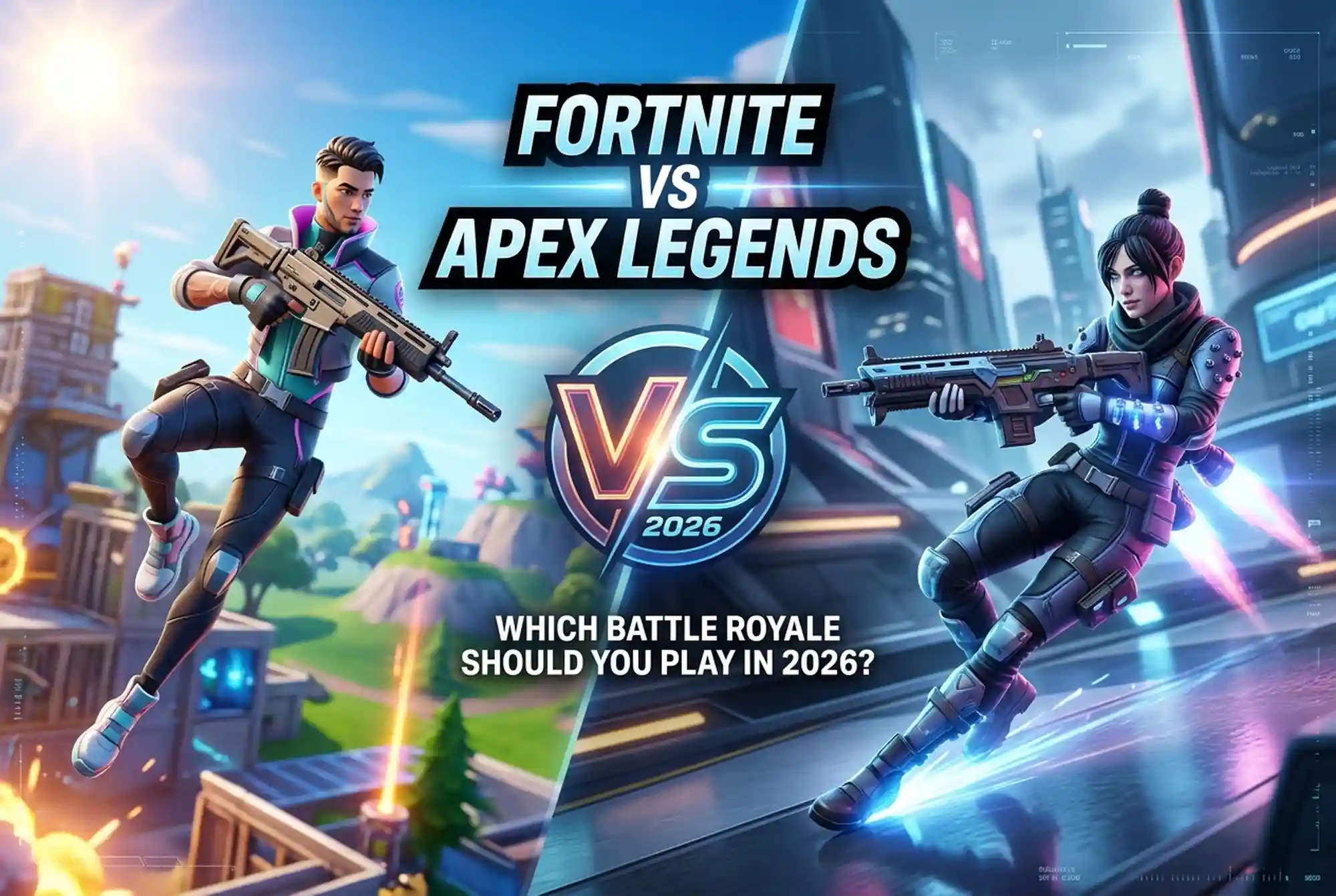
Two of the biggest battle royales in the world. Two completely different experiences. If you’re trying to decide which one to commit your time to—or whether to jump between both—here’s what you need to know.
At a Glance
| Aspect | Fortnite | Apex Legends |
|---|---|---|
| Current Season | Chapter 7 Season 4 “Override” (Sept 2026) | Ongoing with regular updates |
| Core Gameplay | Build-focused with Zero-Build alternative | Fast-paced movement shooter |
| Squad Size | Solo, Duo, Trio, Squad (flexible) | Fixed 3-player squads |
| Learning Curve | Zero-Build mode accessible; building steep | Movement mechanics challenging; tight gunplay |
| Time-to-Kill (TTK) | Slower (building changes fights) | Fast (punishes poor positioning) |
| Esports Scene | Larger prize pools; higher viewership | Competitive, methodical, growing |
| Cosmetics/Skins | Frequent crossover events; $10 Battle Pass | Pricier skins; $10 Battle Pass |
| Platforms | PC, PS5, PS4, Xbox Series X/S, Switch, Cloud | PC, PS5, PS4, Xbox Series X/S, Switch, Mobile (Android) |
| Active Players | Millions daily (exact figures not public) | ~65–80M monthly; ~631k daily peak; 254k Steam peak (June 2026) |
| Update Pace | Frequent, seasonal; aggressive content drops | Methodical; balanced update philosophy |
| Best For | Variety lovers; creators; casual players | Shooter purists; team-focused players; competitive grinders |
What Makes Fortnite Unique
Fortnite is controlled chaos. Every match feels different because the map changes seasonally, the meta shifts fast, and the thing that made yesterday’s favorite gun meta can be vaulted tomorrow. If you crave variety, Fortnite is your game.
Building and Zero-Build Duality
The signature mechanic is building—stack walls, ramps, and cover on the fly to outmaneuver opponents. But not everyone loves building. That’s why Fortnite offers Zero-Build mode: no construction, pure gunplay and positioning. This is huge for accessibility. Want to learn Fortnite without the building skill ceiling? Zero-Build lets you. Want the classic building experience? Chapter 7 Season 4 is loaded with it.
Pop Culture Playground
Every season, Fortnite partners with massive franchises. You play as characters from Sonic, Marvel, DC, anime, celebrity musicians—the list is endless. This drives cultural relevance and makes cosmetics feel like events, not just skins. Younger players especially love the crossover appeal. Content creators build careers around Fortnite’s cosmetics and seasonal hype.
Aggressive Seasonal Shifts
Fortnite’s map evolves. Poi’s vanish; new ones appear. The meta guns rotate. Mechanics get added, then sunset. Some people find this exhausting; others call it genius. You’re never grinding the same game twice, which keeps engagement high and playtime fresh.
Larger Esports Prize Pools
Fortnite’s competitive scene offers bigger prize pools and consistently higher viewership than Apex at major tournaments. If you’re dreaming of going pro, Fortnite has more money on the table.
Verdict: Play Fortnite if you love variety, cosmetic events, and a game that reinvents itself every season. Zero-Build mode makes it genuinely accessible even if building isn’t your thing.
What Makes Apex Legends Unique
Apex Legends is a shooter’s shooter. It’s built on movement, positioning, and gunplay—the fundamentals of competitive FPS games. Every decision matters because there’s nowhere to hide behind a wall you just built.
Movement System That Rewards Mastery
Apex’s movement mechanics—sliding, bunny hopping, air-strafing—create a high skill ceiling. Learning these techniques takes hours, but landing them feels incredible. The movement isn’t just flashy; it’s integral to survival. It’s why high-level Apex play looks like a different game than low-level play.
Legend Abilities Create Roles
Apex’s character-based system (called “legends”) adds depth. You’re not just a nameless soldier; you’re Gibraltar (tank), Wraith (mobility), Bloodhound (intel), or one of dozens of other specialists. Team composition actually matters. Coordinating abilities with your squad is part of the skill expression.
The Ping System
Apex’s ping wheel is arguably the best communication system in any battle royale. Point at an enemy, a loot bin, or a destination, and your squad instantly knows your intent—no voice chat required. This democratizes squad play and makes communication elegant.
Tighter Gunplay, Faster TTK
Weapons hit hard and fast. You can’t out-build an opponent with perfect aim. Position poorly, and you die in seconds. This rewards shooter fundamentals over gimmicks and appeals to players who cut their teeth on traditional FPS games like CS:GO, Valorant, or Overwatch.
Lore and Character Depth
Apex invests in character storytelling. The legends have personalities, relationships, and evolving narratives. If you care about the world your game happens in, Apex delivers.
Verdict: Play Apex Legends if you’re a shooter-first player who values tight gunplay, movement depth, and team coordination over cosmetic chaos. This is for competitive grinders and FPS veterans.
Learning Curve: Which Is Easier to Pick Up?
Fortnite has the lower entry barrier—especially in Zero-Build mode, where you’re just shooting like a normal game. Building has a steep ceiling but a manageable floor; you can play casually without landing perfect ramp rushes. The cosmetic appeal also makes early play feel rewarding.
Apex Legends starts harder. Movement mechanics are unintuitive, legends have ability cooldowns to learn, and the TTK is unforgiving. But once you get it, the skill expression is deeper. There’s no mechanical ceiling; you can always improve.
Winner: Fortnite for raw accessibility; Apex for long-term depth.
Competitive and Esports Angle
Fortnite’s Esports Scene
Fortnite has dominated esports sponsorships and viewership. Seasonal Fortnite Championship tournaments draw millions of viewers. The prize pools are larger, and streaming revenue is historically higher. If you’re building a competitive career, Fortnite opens more doors—sponsorships, team contracts, and content monetization.
Apex’s Competitive Path
Apex has a smaller but dedicated competitive community. The play is methodical, team-focused, and rewarding for true competitors. ALGS (Apex Legends Global Series) offers real prize money and professional teams, but the path to pro is narrower than Fortnite’s. Esports sponsorships are rarer, and viewership, while loyal, is lower.
The Reality: Fortnite is the bigger esports machine. Apex is the purer competitive experience. Pick based on whether you want opportunities or craft.
Monetization: How Much Will It Cost?
Both games are free-to-play, and both sell cosmetics. Here’s where they differ:
Fortnite: Battle Pass costs 950 V-Bucks (~$10 USD). Skins range from 800 to 2,000 V-Bucks ($8–$20). You’ll see frequent crossover skins (Sonic, Spider-Man) tied to seasonal events. The cosmetics have clear cultural relevance, so spending feels tied to hype and events rather than pure gameplay.
Apex Legends: Battle Pass costs 950 Apex Coins ($10 USD). Legendary skins cost 1,800 Apex Coins ($18), making cosmetics pricier than Fortnite. The cosmetics are more grounded and less tied to celebrity crossovers (though there are occasional collabs). Pricing feels steeper for similar cosmetic value.
Verdict: Fortnite’s cosmetics feel more event-driven and accessible. Apex’s cosmetics are pricier but less predatory with the seasonal pricing.
Neither game requires spending money to play competitively—cosmetics are cosmetic.
Who Should Play Fortnite?
- Content creators — the cosmetic and seasonal hype drives viewership
- Younger players — crossovers with pop culture franchises feel accessible and exciting
- Casual players — Zero-Build mode removes the building skill gate
- Variety seekers — seasonal changes keep the game fresh
- Players who like pop culture tie-ins — Fortnite’s cosmetics are unbeatable in this space
Who Should Play Apex Legends?
- Shooter purists — gunplay and positioning matter more than gimmicks
- Competitive grinders — the skill expression and team play run deep
- Movement enthusiasts — sliding, bunny hopping, and air-strafing reward mastery
- Players who want meaningful team coordination — legend abilities and role-based gameplay matter
- Slightly older/serious playerbase — the tone is less chaotic, more tactical
The Honest Verdict
Fortnite wins on accessibility and variety. If you’re new to battle royales, want cosmetics tied to pop culture moments, or enjoy a game that reinvents itself every season, Fortnite is the answer. Zero-Build mode means you don’t have to master building to enjoy it. Its esports scene is also bigger, so if competitive dreams are on your mind, Fortnite opens more doors.
Apex Legends wins on gunplay and depth. If you’ve played shooters before and want a battle royale that rewards pure skill—movement, positioning, teamwork—Apex is for serious players. The TTK is faster, the stakes feel higher, and the mechanical ceiling is genuinely infinite. You’ll feel every improvement you make.
The reality? These aren’t competitors in the way you might think. Fortnite is a cultural event that happens to be a game. Apex is a shooter game that happens to be a battle royale. They solve different problems.
Why Not Both?
They’re both free. If you’ve got storage and time, try Fortnite for cosmetics, seasonal fun, and approachability. Try Apex for pure gunplay and team coordination. Play the one that matches your mood—sometimes you want chaos; sometimes you want precision.
Whichever you pick, you’re joining one of the most active gaming communities on the planet. The community is massive, matchmaking is fast, and updates are constant. Both games are actively developed and built to last.
The real question isn’t which is better. It’s which one feels better in your hands right now. Drop in, land hot, and find out.
Leave a Reply